
A backyard pond with a waterfall isn’t just a landscaping feature, it’s a focal point that brings movement, sound, and wildlife to your outdoor space. Whether someone’s working with a sprawling yard or a tight corner lot, the options range from elaborate multi-tiered cascades to compact pondless systems. This guide walks through practical designs, material requirements, and budget-conscious approaches for homeowners ready to dig in. Expect honest talk about what’s doable as a weekend project and what might need professional help.
Table of Contents
ToggleKey Takeaways
- A backyard pond waterfall improves water oxygenation, creates natural sound masking, and attracts wildlife while boosting property value for homeowners investing in outdoor living.
- Waterfall foam sealant and proper EPDM liner placement (45-mil thickness minimum) are essential non-negotiable steps that prevent water loss and ensure reliable flow over stones.
- Pondless waterfall systems offer a safer, low-maintenance alternative to traditional ponds, fitting compact yards under 200 square feet while using buried vault reservoirs and appropriately-sized pumps (calculate 100 GPH per inch of spillway width).
- Budget-conscious backyard pond waterfall projects can cost under $1,500 by sourcing local stone, hand-digging excavation, using flexible EPDM liner over preformed shells, and starting with single-drop designs before adding complexity.
- Multi-tiered waterfall features on sloped lots maximize visual interest and oxygenation, requiring proper pump capacity planning and marginal plant placement to stabilize soil between 12–24 inch vertical spacing.
- Electrical safety, local permit requirements for features over 24 inches deep, and seasonal maintenance planning (including auto-fill valves for evaporation) are critical details often overlooked in DIY waterfall installations.
Why Add a Waterfall to Your Backyard Pond?
Waterfalls do more than look good, they serve functional purposes that improve pond health and usability.
Oxygenation is the big one. Moving water increases dissolved oxygen levels, which benefits fish like koi and goldfish and helps beneficial bacteria break down organic waste. Stagnant ponds develop algae blooms and odor problems: circulation prevents both.
Sound masking is another practical benefit. The white noise from falling water dampens neighborhood chatter, traffic, and barking dogs. In urban or suburban lots, this creates a privacy buffer without building a fence.
Wildlife attraction increases with water movement. Birds, frogs, and beneficial insects gravitate toward the sound and splash zones. A well-designed waterfall creates shallow areas for drinking and bathing, which songbirds prefer over deep water.
From a property value standpoint, water features rank high on buyer wish lists, especially in regions with long growing seasons. They signal that a homeowner invests in outdoor living, which plays well during resale.
Natural Stone Waterfall Pond Designs
Natural stone waterfalls mimic stream beds and blend into informal landscape designs. The key materials, fieldstone, flagstone, and river rock, vary in cost and workability, but all weather well and resist algae buildup better than smooth surfaces.
Fieldstone (often granite or sandstone) ranges from fist-sized cobbles to boulders weighing several hundred pounds. Use larger stones for the main spillway structure and smaller ones to fill gaps. Aim for irregular shapes: uniform rocks look artificial.
Flagstone works well for broad, flat spillways where water sheets across the surface before dropping. Pennsylvania bluestone and Arizona flagstone are common: expect to pay $300–$600 per ton depending on region and grade.
River rock (1–3 inches diameter) fills voids, stabilizes soil around the waterfall base, and softens edges. A half-ton covers roughly 50–70 square feet at 2-inch depth.
Construction basics: Start with a stable base, compact the soil or pour a 4-inch gravel pad to prevent settling. Stack stones so each tier overhangs slightly, creating turbulence and that classic cascade sound. Use waterfall foam sealant (black polyurethane foam in a can) to direct water over the stones instead of under them. This isn’t optional: water always follows the path of least resistance, and unsealed gaps mean you’ll lose flow.
Liner considerations: EPDM rubber liners (45-mil thickness minimum) drape over the waterfall structure and extend into the pond basin. Underlayment fabric goes beneath the liner to protect against punctures from sharp stone edges.
DIY Pondless Waterfall Ideas for Small Backyards
Pondless waterfalls recirculate water through an underground reservoir instead of an open basin. They’re safer for families with young kids, require less maintenance than traditional ponds, and fit into tight spaces, think 6×8 feet or smaller.
The basic setup includes a buried vault (a plastic basin or modular reservoir block), a pump, and a spillway. Water flows over rocks into a gravel bed, drains into the vault, and gets pumped back to the top.
System Components
- Reservoir vault: Pre-formed basins hold 50–100 gallons. For larger features, use modular pondless waterfall vault blocks (Aquascape and Atlantic Water Gardens make common models). Surround the vault with 1.5–3-inch river rock for filtration.
- Pump sizing: Calculate gallons per hour (GPH) based on waterfall width. A common rule is 100 GPH per inch of spillway width for a moderate flow. A 12-inch-wide waterfall needs a 1,200 GPH pump. Add 100 GPH for every foot of vertical lift (head height). Submersible pumps rated for continuous duty work best: look for mag-drive models for energy efficiency.
- Spillway options: Stacked stone (most natural-looking), pre-formed resin spillways (easier to install, uniform flow), or a simple pipe outlet camouflaged with rocks.
Excavation depth: Dig 12–18 inches for the reservoir area. Slope the surrounding gravel bed toward the vault at roughly 1 inch per foot to ensure drainage.
Electrical: Most pumps run on standard 120V. Use a GFCI-protected outlet within 6 feet of the water feature. Many jurisdictions require a licensed electrician for outdoor outlets: check local codes before pulling wire yourself.
Multi-Tiered Waterfall Pond Features
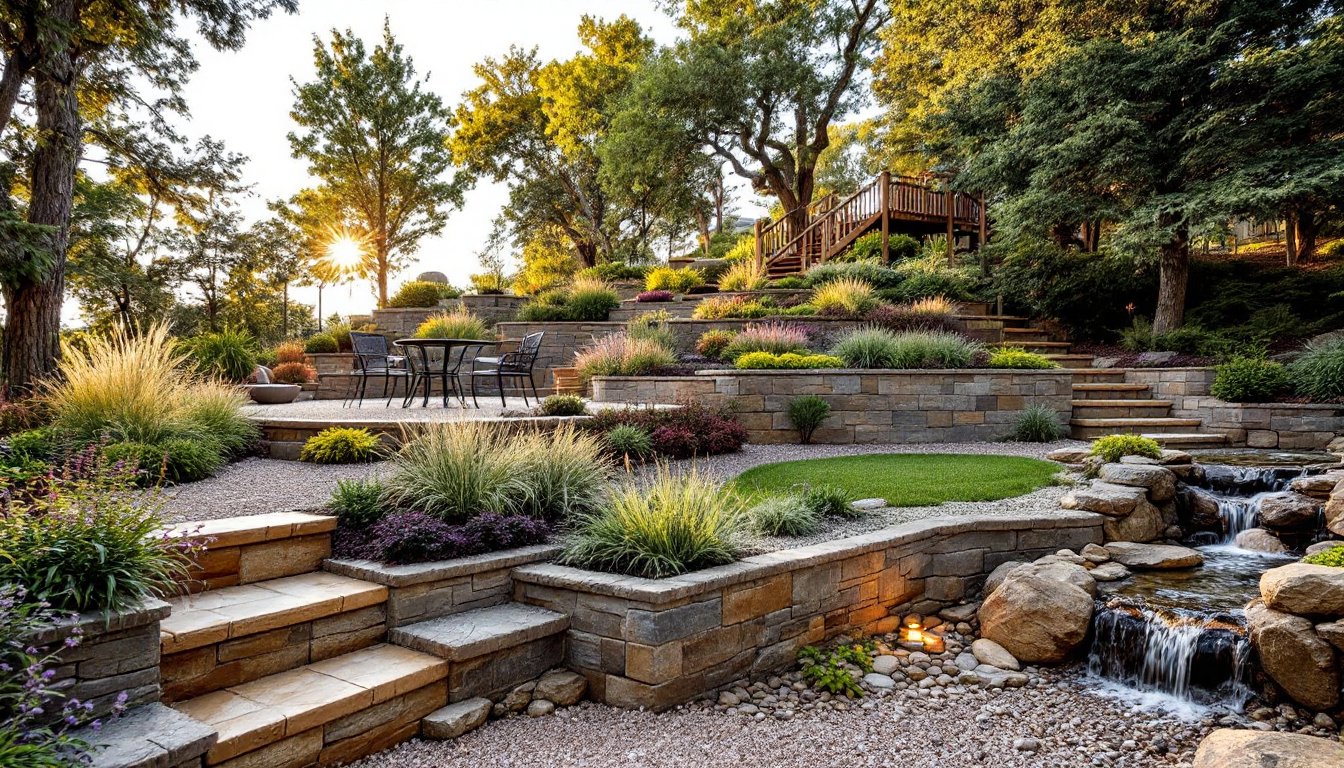
Multi-tiered waterfalls create visual interest and increase oxygenation by breaking the flow into multiple drops. They work especially well on sloped lots where you’re working with existing grade changes.
Planning tiers: Each tier needs a catch basin (even a shallow depression lined with EPDM) before water spills to the next level. Space tiers 12–24 inches apart vertically for audible splashing without excessive spray. Horizontal spacing depends on available room, but 18–30 inches between tiers allows for planting pockets and stone placement.
Pump placement for multi-tier systems: A single pump at the pond bottom can feed the top tier if the total vertical lift doesn’t exceed the pump’s capacity. For taller features (over 6 feet), consider a booster pump or split the system into two pumps feeding different tiers.
Material anchoring: Larger stones (over 50 pounds) stay put through gravity alone. Mid-sized stones benefit from construction adhesive or waterfall foam to lock them in place. This prevents shifting during freeze-thaw cycles or when cleaning the feature.
Planting zones: Marginal plants like creeping jenny, Japanese iris, and cardinal flower soften hard edges and stabilize soil. Tuck them into crevices between tiers where roots can access moisture without sitting in deep water. Avoid aggressive spreaders like mint unless you’re prepared to trim regularly.
Essential Materials and Equipment for Building Your Pond Waterfall
Getting the material list right up front saves trips to the supplier and prevents mid-project compromises.
Liner and Underlayment
- EPDM rubber liner: 45-mil minimum thickness. Calculate size by adding twice the max depth plus 2 feet of overlap to both length and width. A 10×12-foot pond with 2-foot depth needs roughly a 16×18-foot liner.
- Underlayment fabric: Geotextile fabric (8–10 oz/sq yd) protects the liner from rocks and roots. Some installers use old carpet or sand, but fabric drapes better over irregular contours.
Pump and Plumbing
- Submersible pump: Sized for desired flow rate and head height (vertical lift). Energy-efficient models use 200–400 watts for typical backyard features.
- Flexible PVC tubing: 1.5-inch or 2-inch diameter for most waterfalls. Kink-resistant tubing costs more but prevents flow restrictions on curves.
- Check valve: Prevents backflow when the pump shuts off, keeping the waterfall primed for quick restarts.
Rock and Gravel
- Boulders: 100–300 pounds each for major structural points. Rent a skid steer or hand truck with pneumatic tires: moving these by hand risks injury.
- Accent stones: 20–60 pounds, enough variety to look random.
- River rock or pea gravel: Half-ton minimum for edging and fill.
Tools
- Spade and trenching shovel: For excavation. A flat-bladed spade cuts cleaner edges than a round-point.
- Level: 4-foot or longer. Waterfall lips must be level side-to-side or flow favors one direction.
- Utility knife: For trimming liner. Replace blades often: dull cuts snag.
- Waterfall foam gun: Low-expansion black foam for sealing gaps. Standard expanding foam discolors and breaks down in UV.
Safety Gear
- Gloves: Leather or synthetic for handling stone.
- Safety glasses: Rock chips and foam overspray are real hazards.
- Knee pads: You’ll spend hours kneeling on gravel and liner.
- Steel-toe boots: If moving boulders.
Permits: Most residential water features under 24 inches deep don’t require permits, but check with your local building department. If the project involves significant grading (over 50 cubic yards of soil movement) or electrical work beyond a plug-in pump, permits may apply.
Budget-Friendly Backyard Pond and Waterfall Ideas
A full natural stone waterfall with a stocked pond can run $3,000–$10,000 depending on size and materials. But there are ways to hit the same aesthetic for less if you’re willing to do the labor and get creative with sourcing.
Material Cost-Cutting
Local stone over imported: Fieldstone sourced regionally costs 30–50% less than specialty stone shipped across the country. Ask landscape suppliers about “seconds” or irregular pieces sold at a discount.
Reuse and repurpose: Broken concrete (“urbanite”) works as a base layer under decorative stone. Reclaimed bricks, stacked on edge, create rustic spillways. Check Craiborne or estate sales for used pond liners, inspect carefully for holes, but a patched liner beats buying new if budget’s tight.
Flexible liner vs. preformed shells: Rigid plastic pond shells cost $200–$600 and limit shape options. EPDM liner runs $0.60–$1.20 per square foot and adapts to any design.
DIY Labor Savings
Excavation by hand: Renting a mini excavator costs $250–$400/day. For ponds under 200 square feet and 2 feet deep, hand-digging over a weekend saves rental fees and gives better control over contours. Recruit help: moving soil is a two-person job.
Pump selection: Higher GPH isn’t always better. An oversized pump wastes electricity and creates excessive turbulence. Match pump capacity to actual needs.
Simplified Designs
Single-drop waterfalls are easier to build and use less stone than multi-tiered features. A 2-foot vertical drop still provides sound and oxygenation without complex plumbing.
Container water gardens offer waterfall effects in barrels or galvanized tubs. A 50-gallon whiskey barrel, a small pump, and a stack of flat stones create a tabletop-scale feature for under $150.
Integrating a pond into a larger backyard makeover spreads costs and lets homeowners phase the project, starting with the basic pond basin one season and adding the waterfall the next.
Maintenance considerations: Smaller ponds heat up faster in summer and require more frequent water top-offs due to evaporation. Plan for 1–2 inches of water loss per week in hot climates. An auto-fill valve (similar to a toilet float valve) costs $30–$50 and maintains levels automatically, which is cheaper than running a hose daily.
Conclusion
Building a backyard pond with a waterfall takes planning, some sweat equity, and realistic expectations about what’s DIY-able versus when to call in help. Whether someone’s stacking natural stone on a slope, installing a compact pondless system in a courtyard, or working within a tight budget using reclaimed materials, the end result adds movement and life to outdoor spaces. The key is matching the design to the site conditions, choosing materials that hold up to weather and water, and not skipping the unglamorous steps like proper liner placement and pump sizing. Do those right, and the feature runs reliably for years.