A cactus garden isn’t just for Arizona homeowners anymore. With the right planning, nearly any backyard can support a drought-tolerant, low-maintenance landscape that looks sharp year-round without constant watering or mowing. Cacti and succulents offer texture, form, and resilience, especially valuable in areas facing water restrictions or homeowners tired of fussy flowerbeds. Whether someone’s working with a sunny corner lot or a small patio, a well-designed cactus garden delivers visual impact with minimal ongoing effort. This guide walks through layout strategies, variety selection, design approaches, and practical care tips to help anyone build a thriving desert-inspired space.
Table of Contents
ToggleKey Takeaways
- A backyard cactus garden requires minimal maintenance—just occasional weeding, light annual fertilizer, and pest inspections—making it ideal for busy homeowners.
- Proper drainage and at least 6–8 hours of direct sunlight are essential; amend heavy clay soil with sand and gravel or build raised beds to prevent root rot.
- Choose cold-hardy varieties like Opuntia (prickly pear) for northern zones or sun-loving barrel cacti and columnar species for southern regions to ensure year-round structure.
- Water newly planted cacti weekly for the first month, then reduce frequency significantly; established plants often survive weeks without irrigation, cutting water costs dramatically.
- Design your cactus garden with decomposed granite pathways, accent boulders, and drought-tolerant perennials to create visual depth while maintaining the low-maintenance appeal.
- Protect borderline-hardy cactus garden specimens in zone 7 and colder with frost cloth during hard freezes, and inspect plants monthly for scale and mealybugs.
Why Choose a Cactus Garden for Your Backyard?
Water efficiency sits at the top of the list. Established cacti can survive weeks or even months without supplemental irrigation once their roots settle in. In regions where water costs climb or drought ordinances limit outdoor use, that’s a practical advantage, not just an eco-friendly talking point.
Minimal maintenance follows close behind. No weekly mowing, seasonal reseeding, or constant deadheading. Most cacti require occasional weeding, a light fertilizer application once or twice a year, and annual inspection for pests like scale or mealybugs. Compare that to the upkeep schedule of a traditional lawn or perennial bed.
Year-round structure makes cacti stand out. While deciduous plants go dormant and leave bare gaps, cacti hold their shape through winter. Architectural varieties like columnar cacti or barrel forms become living sculptures that anchor the landscape even in January.
Hardiness across zones expands options beyond the Southwest. Cold-hardy varieties such as Opuntia (prickly pear) survive winters in USDA zones 4–5, tolerating temperatures well below freezing when planted in well-draining soil. Homeowners in the Midwest and even parts of the Northeast can incorporate cacti into rock gardens or raised beds with proper variety selection.
Planning Your Backyard Cactus Garden Layout
Start with sun exposure and drainage. Cacti need at least six hours of direct sunlight daily, eight to ten is better. South-facing beds or areas away from roof overhangs work best. Check drainage by digging a test hole about 12 inches deep, filling it with water, and timing how long it takes to empty. If water sits for more than an hour, amend the soil with coarse sand and pea gravel, or build a raised bed.
Raised beds solve drainage problems in heavy clay soils common across much of the South and Midwest. Frame beds with stacked stone, landscape timbers, or galvanized steel edging. Aim for at least 8–12 inches of height and fill with a mix of native soil, coarse sand, and decomposed granite in roughly equal parts. This mimics the fast-draining substrate cacti evolved in.
Spacing and access matter more than many first-time planters expect. Mature barrel cacti can reach 2–3 feet in diameter: columnar varieties grow 6–15 feet tall depending on species. Leave enough room for growth and for safe access when weeding or inspecting plants. Thick leather gloves and long-handled tongs are essential, cactus spines aren’t just sharp: many have microscopic barbs that lodge in skin.
Slope and microclimates influence placement. A gentle slope aids drainage and can create visual interest when planting at varied elevations. South-facing slopes receive more intense sun and heat, suitable for sun-loving species. North-facing areas or spots near walls that radiate heat overnight can extend the range of borderline-hardy varieties in cooler zones.
Best Cactus Varieties for Backyard Gardens
Prickly pear (Opuntia) tops the list for versatility. Varieties like Opuntia humifusa handle cold to zone 4, while Opuntia ficus-indica thrives in zones 9–11. Pads grow in flat, segmented shapes: many produce bright yellow, orange, or red blooms in late spring. Mature plants spread 3–5 feet wide and tolerate poor soil.
Barrel cacti (Ferocactus and Echinocactus) offer compact, spherical forms. Echinocactus grusonii (golden barrel) grows slowly to about 3 feet diameter and survives light frosts in zone 9. Ferocactus cylindraceus (California barrel) handles more cold and works in zone 8 with protection. Both need full sun and excellent drainage.
Hedgehog cacti (Echinocereus) form clumping colonies and produce vivid magenta or red flowers. Echinocereus triglochidiatus (claret cup) tolerates cold to zone 5 and grows well in rock gardens. Clusters reach 12–18 inches tall and spread gradually.
Columnar varieties add vertical drama. Carnegiea gigantea (saguaro) requires zone 9 or warmer and takes decades to reach iconic size, but younger specimens still provide structure. Stenocereus thurberi (organ pipe) works in similar climates. For colder zones, consider Cylindropuntia imbricata (tree cholla), hardy to zone 5 with protection, which grows 4–8 feet tall with branching form.
Agave (technically a succulent, not a true cactus) complements cactus plantings. Agave parryi handles zone 5: Agave americana thrives in zones 8–11. Rosette forms range from 1 to 6 feet across depending on species. Sharp terminal spines require careful placement away from pathways.
Design Styles and Themes for Cactus Gardens
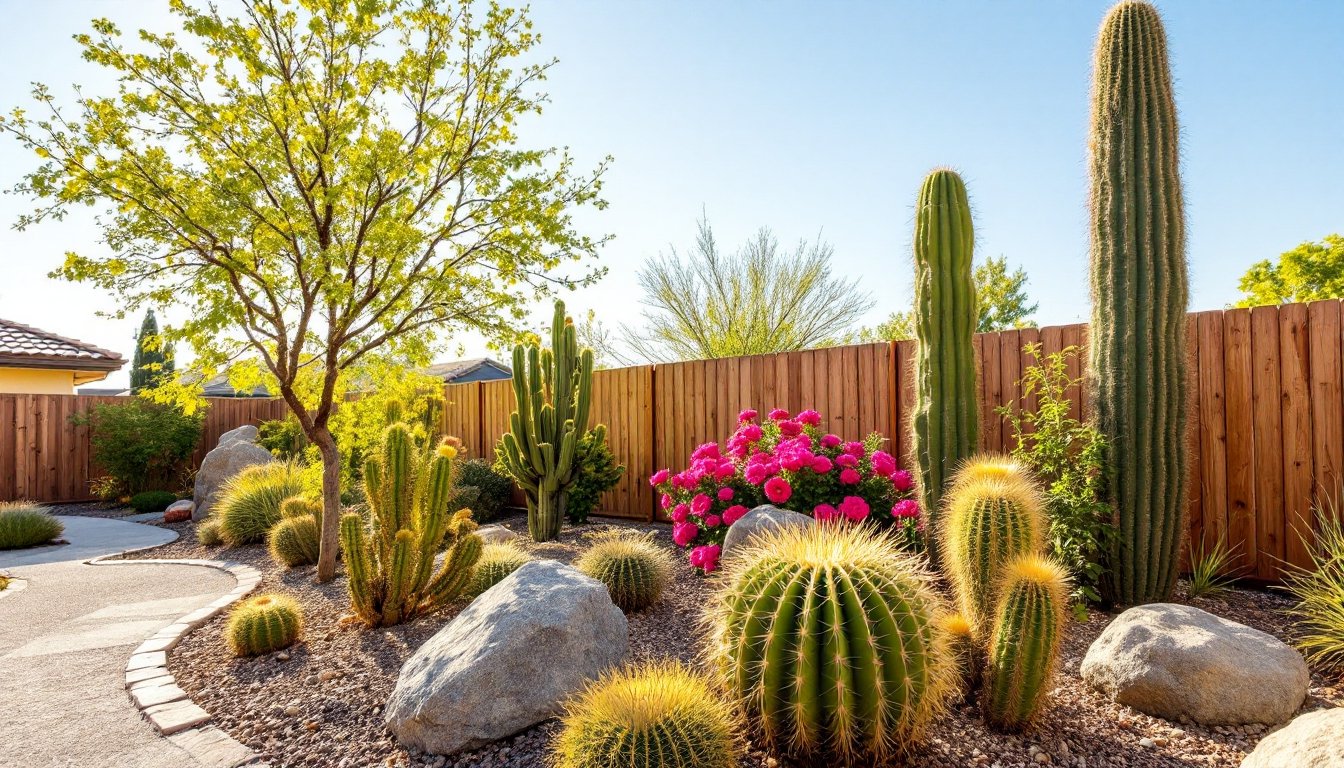
Desert minimalism emphasizes clean lines and negative space. Group three to five cacti of varying heights in a bed of decomposed granite or crushed gravel. Use large boulders sparingly as focal points. This approach works well in contemporary landscape design projects where simplicity and form take priority over busy planting schemes.
Southwestern courtyard style incorporates stucco walls, terracotta pots, and warm earth tones. Combine cacti with drought-tolerant perennials like Salvia greggii or Penstemon. Add a simple water feature, a shallow basin or bubbler, to introduce movement without heavy water use. This design suits enclosed patios or side yards.
Rock garden integration blends cacti into existing stone features. Tuck smaller varieties like hedgehog cacti or Mammillaria species between boulders in naturalistic clusters. Use a mix of stone sizes and types, flagstone, river rock, and angular granite, to create texture. This approach fits well in areas where landscaping upgrades need to tie into existing hardscaping.
Container groupings offer flexibility for renters or those with limited ground space. Plant cacti in unglazed terracotta or concrete pots with drainage holes. Group containers of different heights on a gravel pad or patio corner. This allows seasonal rearrangement and brings tender varieties indoors before hard freezes in colder zones.
Essential Care and Maintenance Tips
Watering schedules vary by season and climate. Newly planted cacti need weekly watering for the first month to establish roots, then taper off. Established plants in the Southwest may need water once every 2–3 weeks during summer, none in winter. In humid regions, reduce frequency, overwatering causes root rot faster than drought kills cacti. Water deeply at the base: avoid wetting the plant body.
Soil amendments matter at planting time. Mix native soil with coarse sand (not fine play sand) and pea gravel or pumice in a 1:1:1 ratio. This ensures water drains within minutes, not hours. Avoid standard potting soil or compost, which retains too much moisture. For in-ground beds, till amendments into the top 8–12 inches.
Fertilizer applications stay light. Use a low-nitrogen, diluted liquid fertilizer (5-10-10 or similar) once in early spring and again in mid-summer if plants show slow growth. Over-fertilizing encourages weak, leggy growth prone to cold damage. Skip fertilizer entirely during fall and winter.
Pest management focuses on scale, mealybugs, and occasional aphids. Inspect plants monthly, checking base of spines and undersides of pads. Dislodge insects with a strong spray from a hose or wipe with rubbing alcohol on a cotton swab. Leather gloves and safety glasses protect during close inspection.
Winter protection extends the range of borderline-hardy species. In zone 7 and colder, cover plants with frost cloth or burlap when temperatures drop below 20°F for extended periods. Avoid plastic, which traps moisture. For potted specimens, move containers to an unheated garage or porch during hard freezes.
Creative Landscaping Elements to Enhance Your Cactus Garden
Pathways and edging define garden boundaries and provide safe access. Decomposed granite compacts well and complements desert plantings better than wood chips or mulch. Edge paths with steel or stone to prevent migration. Keep paths at least 24 inches wide to avoid accidental contact with spines. For ideas on integrating pathways into broader outdoor transformations, consider how circulation patterns connect different zones.
Accent boulders and stones add scale and anchor plantings. Position one or two large stones (200+ pounds) as focal points before planting: moving them later risks damaging roots. Nestle smaller cacti near the base of boulders to create naturalistic groupings. Desert-inspired designs often rely on this layering technique for visual depth.
Ground covers and mulches suppress weeds and moderate soil temperature. Use 2–3 inches of crushed gravel, decomposed granite, or lava rock. Avoid organic mulches like bark or wood chips, which retain moisture and can encourage fungal issues. Light-colored gravels reflect heat: darker materials absorb it, choose based on your zone and microclimate.
Lighting and hardscape accents extend usability into evening hours. Low-voltage LED uplights positioned at the base of columnar cacti create dramatic shadows. Path lights improve safety without overwhelming the landscape. Metal sculptures, rusted steel panels, or simple ceramic pieces add focal interest. Homeowners researching broader design trends often find that desert gardens pair well with modern, minimalist aesthetics.
Companion plantings soften hardscaping and add seasonal color. Drought-tolerant perennials like Zauschneria (California fuchsia), Artemisia, or Penstemon bloom at different times and attract pollinators. Ornamental grasses such as blue fescue or Mexican feathergrass provide textural contrast. For detailed planting combinations and care techniques, resources like The Spruce offer region-specific guides.
Conclusion
A well-planned cactus garden delivers resilience, structure, and visual interest without the constant upkeep traditional landscapes demand. By matching varieties to local climate zones, ensuring proper drainage, and incorporating thoughtful design elements, homeowners create outdoor spaces that thrive through drought, freeze, and neglect. The key is starting with site assessment, choosing appropriate species, and committing to smart installation practices, not fighting the conditions the yard already offers.