A chiminea isn’t just a fire feature, it’s a focal point that pulls people outdoors even when the temperature drops. Unlike sprawling fire pits that dominate a patio, these freestanding hearths offer warmth, ambiance, and a sculptural element without requiring permanent installation or a permit in most jurisdictions. Whether a homeowner is looking to extend the usability of their deck through fall or create a cozy gathering spot for weeknight conversations, a well-placed chiminea delivers both function and character. The key lies in choosing the right style, positioning it thoughtfully, and building out the surrounding space to maximize comfort and safety.
Table of Contents
ToggleKey Takeaways
- Backyard chiminea ideas can transform your outdoor space into a cozy gathering zone without requiring permanent installation or building permits in most areas.
- Choose between traditional clay for rustic charm or durable cast iron and steel for longevity, with lifespans ranging from 3–7 years for clay to 10–20 years for metal.
- Position your chiminea on a non-combustible base at least 10 feet from structures, with the front opening angled toward your primary seating area to minimize smoke drift.
- Design a fire-safe zone with a 6–8 foot diameter pad of gravel or stone, add task lighting and storage, and arrange seating 4–6 feet away to balance warmth and comfort.
- Burn only seasoned hardwood, never treated lumber, and perform seasonal maintenance like chimney inspections and rust removal to ensure safe, efficient operation.
- Always verify local fire codes and regulations before installation, as some jurisdictions impose restrictions on open flames or require spark arrestors.
What Is a Chiminea and Why Add One to Your Backyard?
A chiminea is a freestanding, front-loading outdoor fireplace with a bulbous body and a vertical chimney stack. The design originated in Mexico centuries ago, traditionally crafted from clay to heat outdoor living spaces and cook food. Modern versions come in cast iron, steel, and even copper, but the core principle remains the same: contained fire with a chimney that draws smoke upward and away from seating areas.
Unlike open fire pits, chimineas direct heat outward through the front opening while venting smoke through the top stack, making them more neighbor-friendly and better suited for smaller yards or patios. They’re portable, most models weigh between 40 and 150 pounds, light enough to reposition seasonally but heavy enough to stay stable in moderate wind. No need for gas lines, concrete footings, or building permits in most areas (always check local fire ordinances, especially in high fire-risk zones).
Homeowners add chimineas for three practical reasons: extended outdoor season, focused heat, and low commitment. A quality chiminea costs between $100 and $600 depending on material and size, significantly less than a built-in fireplace or gas fire feature. It heats a 6- to 10-foot radius effectively, perfect for a small seating group without heating the entire yard. And if plans change, it moves with the owner or gets stored for winter, no jackhammering required.
Choosing the Right Chiminea Style for Your Space
Material choice dictates longevity, maintenance, and aesthetic. Clay models lean traditional with earthy tones and artisan detailing, while metal options offer durability and modern lines. Size matters too, a 28-inch tall clay chiminea suits a bistro table setup, whereas a 5-foot cast iron model anchors a full conversation area.
Consider the yard’s exposure. Coastal areas with salt air corrode untreated steel quickly: powder-coated or stainless steel holds up better. Dry climates welcome clay, but freeze-thaw cycles in northern regions can crack unglazed terra cotta unless it’s stored indoors during winter. Weight plays into placement: a 100-pound cast iron unit stays put on a stone patio, while a 50-pound clay model needs a stable, level base to prevent tipping.
Traditional Clay vs. Modern Cast Iron and Steel
Clay chimineas offer authentic character and excellent heat radiation. Terra cotta absorbs and releases warmth slowly, extending comfort after the fire dies down. They’re typically hand-painted or glazed, adding a decorative element that complements landscape design choices like stucco walls, natural stone, or Southwestern plantings. Drawbacks: they’re fragile (dropping one ends badly), prone to cracking if exposed to rain while hot, and require curing, a break-in process involving several small fires to temper the clay before full use.
Cast iron and steel chimineas trade rustic charm for durability and heat output. Cast iron retains heat longer and withstands higher temperatures without warping, ideal for burning hardwoods like oak or hickory. Steel versions are lighter and often more affordable, though they rust unless treated with high-heat paint annually. Both metals work well in modern or industrial-style yards and tolerate weather extremes better than clay. Expect a 10- to 20-year lifespan with basic maintenance versus 3 to 7 years for clay in active outdoor use.
Style-wise, traditional clay suits Tuscan, Spanish, or rustic gardens, while sleek black steel or brushed copper models fit contemporary patios with clean lines and minimalist furniture. If the backyard has mixed materials, say, composite decking and metal railings, a cast aluminum chiminea in bronze or charcoal bridges the gap without clashing.
Creative Placement Ideas for Maximum Impact
Placement determines usability and safety. Start with clearances: 10 feet minimum from structures, overhangs, fences, and low-hanging branches. Verify local fire codes, some municipalities restrict open flame within 15 feet of combustible siding or require spark arrestors on chimneys. Position the chiminea on a non-combustible base: concrete pavers, fire-rated stone, or a heat-resistant deck pad (rated for at least 1,200°F). Avoid placing directly on wood decks, composite boards, or dry grass.
Orient the front opening toward the primary seating area, but angle it slightly to prevent direct smoke drift if prevailing winds blow from one direction. A corner spot along a patio edge or near a garden bed works well, it anchors the space without blocking foot traffic. Elevating the chiminea on a low platform (stacked pavers or a purpose-built stand) improves airflow and makes fire-tending easier without stooping.
For small yards, tuck the chiminea into a nook bordered by retaining walls or lattice screens. This creates a semi-enclosed “room” that holds warmth and defines the zone visually. Larger properties benefit from central placement within a circular or U-shaped seating arrangement, turning the chiminea into a true gathering hub. Avoid isolated corners where guests won’t naturally congregate, proximity to pathways or patio doors encourages use.
Consider seasonal access. If the goal is outdoor entertaining from spring through fall, place it near an existing dining or lounge area. For winter use, closer to the house reduces the walk in cold weather and simplifies wood restocking. And always leave enough space behind the chiminea for ash removal and chimney inspection, 24 inches of clearance makes maintenance realistic.
Design Ideas to Enhance Your Chiminea Setup
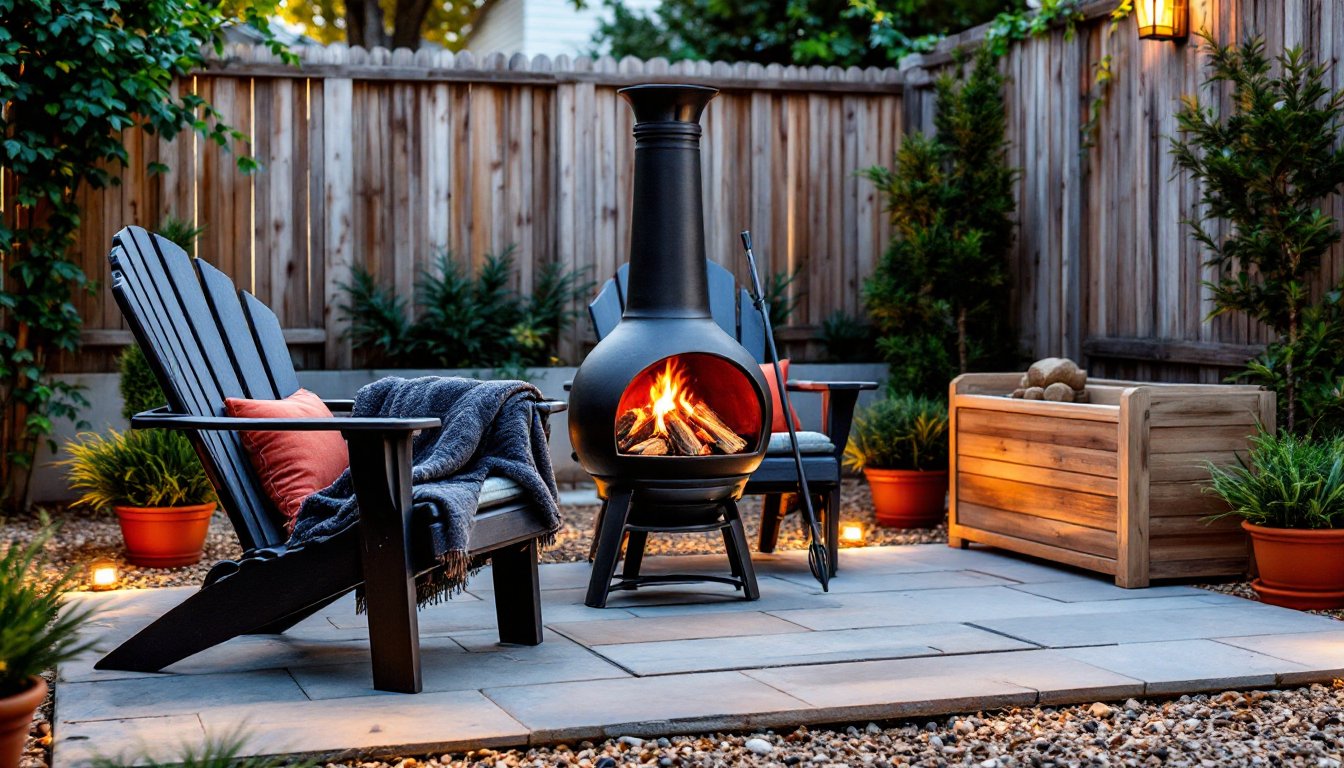
A chiminea alone doesn’t make a destination, layering functional elements around it does. Start with a fire-safe zone: a 6- to 8-foot diameter pad of gravel, decomposed granite, or flagstone that defines the hearth area and contains sparks. Edge it with low border stones or metal landscape edging to separate it visually from lawn or garden beds.
Add task lighting that doesn’t rely on the fire itself. Low-voltage pathway lights along the approach or solar stake lights in surrounding plantings ensure safe navigation without washing out the fire’s glow. A single hooded pendant or shepherd’s hook lantern overhead (if mounted to a nearby pergola post) provides enough light for drink-setting and conversation without overpowering ambiance.
Incorporate storage that doubles as structure. A weatherproof deck box nearby holds firewood, kindling, and fire tools (poker, ash scoop, gloves). Stacked stone or concrete block “benches” around the perimeter offer extra seating and thermal mass that radiates retained heat. If budget allows, a low stucco or stone wall on one side creates wind protection and a backdrop for potted plants or outdoor artwork.
Consider underfoot comfort. Gravel is cheap and drains well, but it’s rough on bare feet. Permeable pavers or bluestone tiles set in sand offer a stable, cleanable surface that feels intentional. For a softer look, large stepping stones set in creeping thyme or Irish moss between the chiminea and main patio add texture and scent when walked on.
Don’t overlook vertical interest. A simple trellis or metal obelisk planted with clematis or climbing roses a few feet back frames the chiminea without crowding it. In garden redesigns, chimineas work especially well as transition elements between formal planting beds and casual lounge zones.
Seating Arrangements and Cozy Gathering Zones
Adirondack chairs and deep-seat outdoor sofas work well for longer gatherings, position them 4 to 6 feet from the opening to balance warmth and comfort. Closer than that, the radiant heat becomes uncomfortable: farther, and guests lose the benefit. Arrange seating in a semi-circle or L-shape rather than a full ring to leave room for fire tending and prevent bottlenecking.
For smaller patios, folding bistro chairs and a round side table create a flexible setup that tucks away when not in use. Built-in stone bench seating with cushions offers permanence and maximizes capacity in tight quarters, a 3-foot curved bench can seat three adults comfortably and stores outdoor blankets underneath if designed with a hinged top.
Layering matters. Outdoor rugs (polypropylene or jute rated for exterior use) anchor seating zones and add color, though keep them outside the 10-foot clearance to avoid ember damage. Throw pillows and fleece or wool blankets draped over chair backs extend the comfortable temperature range by another 10 to 15 degrees Fahrenheit.
Add a drink rail or side surface within arm’s reach of each seat. A 36-inch round fire table (not gas, just a table) in the center with the chiminea offset to one side balances function and sociability. For bigger backyard transformations, a dedicated fire zone with built-in benches, overhead string lights, and a pergola frame becomes a true outdoor room that extends living space year-round.
Safety Tips and Maintenance Best Practices
PPE starts with heat-resistant gloves (leather or welding-grade) and closed-toe shoes, flip-flops near an open flame aren’t worth the risk. Keep a fire extinguisher (Class A, rated for wood and paper) or a 5-gallon bucket of sand within 10 feet. Water works for dousing, but dumping it on a hot clay chiminea can crack it: sand or a metal lid smothers flames without thermal shock.
Burn only seasoned hardwood (oak, maple, ash) with moisture content below 20%. Softwoods like pine produce excess creosote and sparks. Never burn treated lumber, plywood, or trash, pressure-treated wood releases toxic chemicals, and painted or stained scraps create noxious fumes. Avoid oversized logs: pieces 3 to 4 inches in diameter and 12 to 16 inches long burn cleanly without overwhelming the firebox.
Check the chimney and firebox for cracks or rust before each season. Clay chimineas benefit from a thin coat of acrylic sealer (exterior-grade, high-heat) to slow moisture absorption. Metal models need inspection for rust-through, especially around seams and the base. Wire-brush loose rust and apply high-heat stove paint (rated to 1,200°F) to bare spots.
Ash removal prevents buildup that restricts airflow and traps moisture against the base. Let the fire cool completely (overnight minimum), then scoop ash into a metal container with a lid, embers can smolder for 24 hours. Dispose of ash in a non-combustible area away from structures: some gardeners add cold ash to compost for alkalinity, but verify soil needs first.
In winter, store clay chimineas indoors or under a waterproof cover elevated off the ground. Water pooling inside freezes and cracks the body. Cast iron and steel can stay outside, but covering them extends lifespan by reducing rust. Remove covers during use, melted polyester or nylon creates a mess and a hazard.
Never leave a fire unattended, especially on windy days when embers can lift from the chimney. Sparks from well-maintained chimineas are minimal, but a sudden gust can send them onto dry leaves or roof shingles. Extinguish fires completely before heading inside, stir the coals, spread them thin, and verify no red glow remains.
Check local regulations before the first burn. Some municipalities ban wood-burning during red flag warnings or require permits for any open flame. Homeowners’ associations may restrict chimney heights or placement near property lines. A quick call to the fire marshal’s office clears up questions and prevents fines.