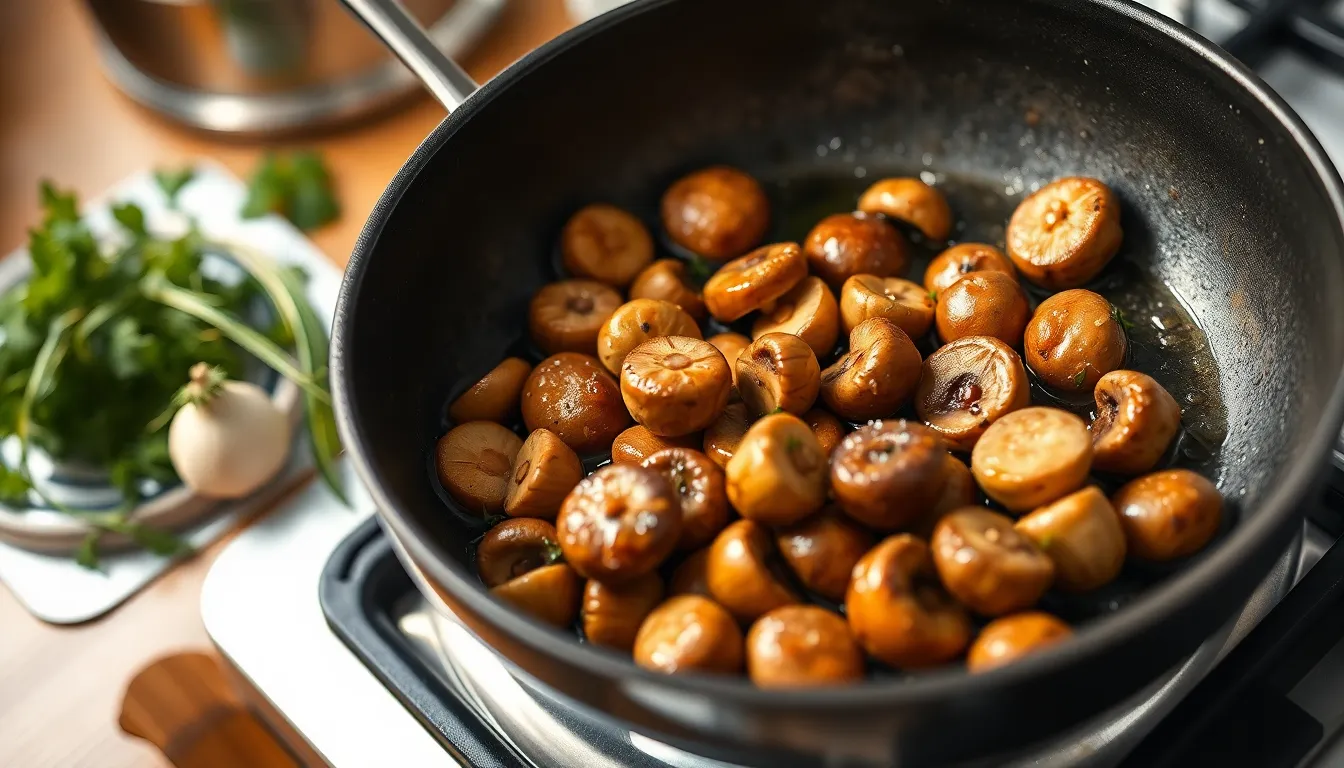
Sautéing mushrooms might seem like a simple task, but getting it just right can elevate any dish from ordinary to extraordinary. Picture this: you’ve got a pan sizzling with butter, the aroma of earthy mushrooms wafting through the air, and your taste buds are already dancing in anticipation. But wait—how long should they really be in that pan?
Understanding Sauteing
Sauteing refers to a cooking method that quickly cooks food over high heat using a small amount of oil or fat. This technique enhances flavors and maintains moisture, essential for preparing vegetables like mushrooms.
What Is Sauteing?
Sauteing involves cooking food in a pan with a small amount of fat at high temperatures. Heat triggers the Maillard reaction, resulting in a browned surface that develops rich flavors. Use a skillet or frying pan for the best results. Different oils can alter the outcome; options include olive oil, butter, or vegetable oil. Sauteing is efficient, often yielding perfectly cooked food in just a few minutes.
Benefits of Sauteing Mushrooms
Sauteing mushrooms offers several advantages. First, it intensifies the mushrooms’ flavors while removing excess moisture. High heat encourages the development of a unique texture, resulting in a tender bite. Quick cooking retains valuable nutrients, preserving their health benefits. Enhanced browning contributes to a more appealing dish. Lastly, the process pairs well with various seasonings, allowing for creative flavor combinations.
Preparing Mushrooms for Sauteing
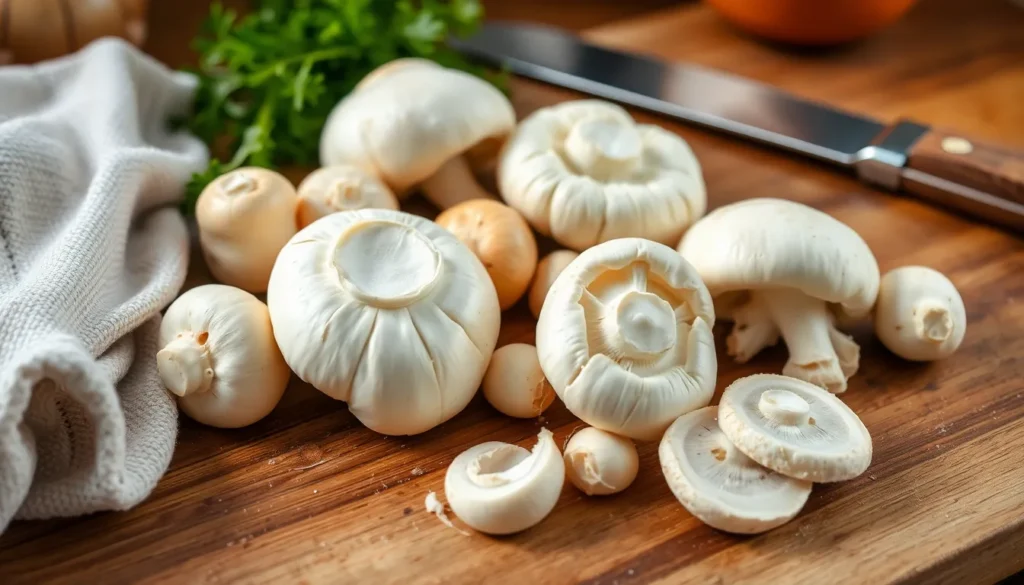
Proper preparation is crucial for sautéing mushrooms effectively. This section addresses the essential steps: choosing the right type of mushrooms and cleaning and slicing them for optimal results.
Choosing the Right Type of Mushrooms
Different types of mushrooms impart distinct flavors and textures. Common choices include white button mushrooms, cremini, and shiitake. Each type offers unique culinary properties. For instance, white button mushrooms provide a mild flavor, while shiitake mushrooms add earthiness. Consider the dish’s flavor profile when making a selection. Fresh mushrooms yield the best results, maintaining moisture and enhancing taste. Dried mushrooms can also work well but require rehydration. Ensure mushrooms are firm and free from blemishes before purchasing. By selecting the right variety, the sautéing process becomes more effective and flavorful.
Cleaning and Slicing Mushrooms
Cleaning mushrooms requires care to maintain their texture and flavor. A damp cloth or mushroom brush effectively removes dirt without saturating them. Avoid soaking mushrooms, as excess water impacts sautéing. After cleaning, proper slicing enhances cooking efficiency. Slice mushrooms evenly to ensure consistent cooking times. Thin slices promote browning and intensify flavors, while thicker slices provide a meaty texture. If using larger mushrooms, quartering may be appropriate. Proper cleaning and slicing prepare mushrooms for absorption of flavors during cooking, contributing to a rich, delicious dish.
How Long to Saute Mushrooms
Sautéing mushrooms involves several factors that can influence cooking time. Altitude plays a role; higher elevations may extend the necessary time for mushrooms to soften. Thickness of slices also matters; thinly sliced mushrooms cook faster than larger pieces. Freshness directly affects moisture content; fresher mushrooms tend to retain moisture, which can slow down cooking. Cooking temperature impacts the outcome too; higher heat achieves browning quickly but may risk burning if not monitored.
Factors Affecting Cooking Time
Slice thickness significantly affects cooking time. Thin slices generally take about 5 to 7 minutes to achieve a golden-brown color. Larger chunks may require 10 to 15 minutes, depending on the specific type of mushroom. Oil type can influence how quickly mushrooms brown; olive oil creates a different reaction than butter. Ambient moisture levels also play a role; drier mushrooms cook evenly compared to their wet counterparts.
General Cooking Time Guide
Cooking time for sautéed mushrooms typically ranges from 5 to 15 minutes. Most varieties, including white button and cremini, achieve perfect tenderness in around 7 to 10 minutes. Shiitake mushrooms, with their denser texture, may require additional time, usually about 10 to 15 minutes. Medium heat effectively promotes even browning, allowing mushrooms to develop depth in flavor. Stir regularly to ensure consistent cooking and avoid burning.
Tips for Perfectly Sauteed Mushrooms
Achieving perfectly sautéed mushrooms relies on a few key techniques and tips. Focus on the temperature you use and how you season your mushrooms.
Ideal Temperature Settings
Medium heat works best for sautéing mushrooms. It allows even cooking while promoting browning. If the temperature is too high, mushrooms may burn before they cook through. Conversely, cooking them on too low a heat can lead to steaming rather than sautéing. A skillet or frying pan preheated to the correct temperature ensures mushrooms develop their desired texture and flavor. Checking for sizzle when adding the mushrooms indicates that the pan is hot enough. This temperature control plays a crucial role in maximizing the umami flavor that sautéed mushrooms can offer.
Seasoning Suggestions
Seasoning enhances the natural flavors of mushrooms. Start with salt and pepper, which elevate taste without overpowering. Fresh herbs like thyme or rosemary add aromatic dimensions. Garlic, when added in the last few minutes, introduces depth without burning. When using soy sauce or balsamic vinegar, apply them sparingly to prevent overwhelming the dish. A sprinkle of lemon juice or a dash of Worcestershire sauce can brighten the overall flavor profile. Experimenting with seasoning combinations helps create a unique taste that pairs well with other ingredients.
Sautéing mushrooms is an essential skill that can elevate any dish. With the right techniques and attention to detail, it’s possible to achieve that perfect balance of flavor and texture. Understanding the cooking times and factors that influence them allows for more control in the kitchen.
By experimenting with different oils and seasonings, cooks can unlock a world of flavors. Whether it’s the simplicity of salt and pepper or the complexity of fresh herbs and sauces, each choice adds a unique touch. Mastering the art of sautéing mushrooms not only enhances meals but also brings joy to the cooking process.